Official U.S. SodaBoost shop60-day window, from purchase30 gummies · one a dayFrom $1.63 a day
Soda-boostLabel · Ceilings · SourcesOrder

SodaBoost Ingredients: Nine Names, Listed in Order

Muira puama, maca, catuaba, green tea, caffeine, ashwagandha, L-arginine, tribulus and horny goat weed — what each is documented for, what the research dosed, and the most each one can weigh in an 82 mg blend.

01What the panel actually lists

Quick answer

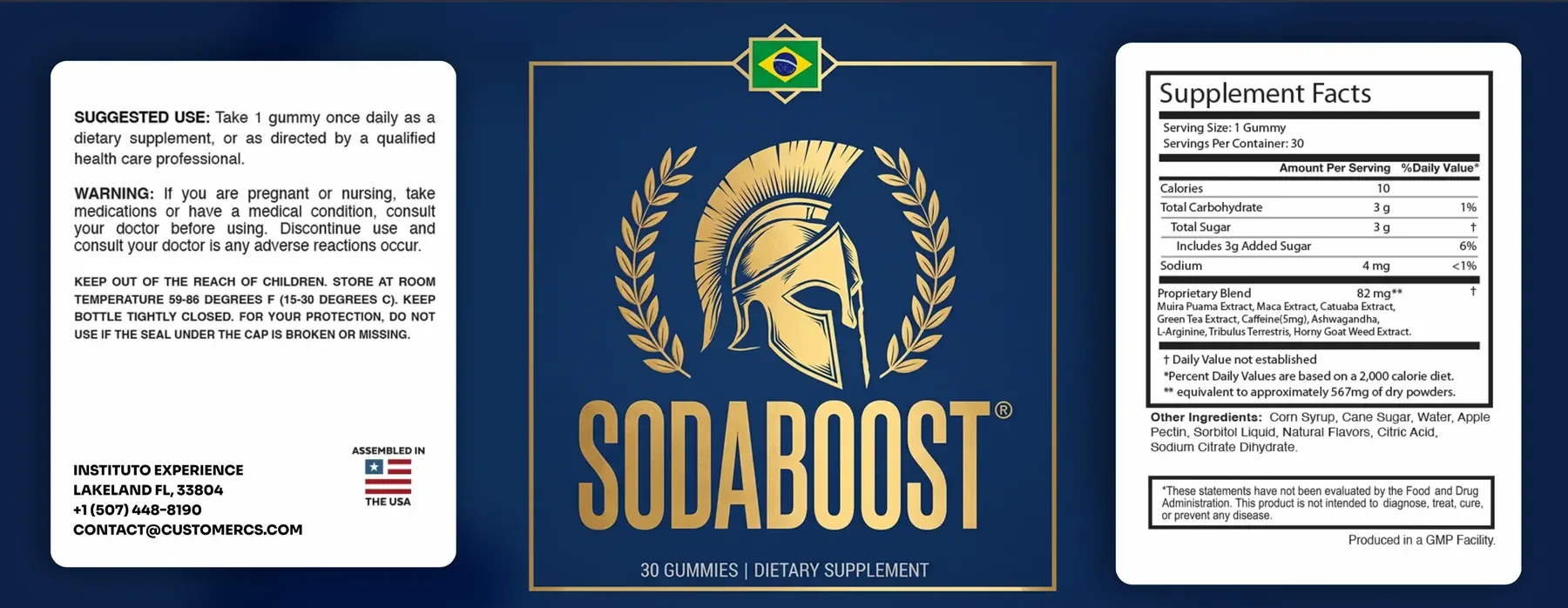
SodaBoost contains nine ingredients in one 82 mg proprietary blend.

In label order: muira puama, maca, catuaba, green tea extract, caffeine (5 mg), ashwagandha, L-arginine, tribulus terrestris and horny goat weed. They are listed by weight, heaviest first.

See the full panel on the supplement facts page.

02What each one can weigh, at most

One declared figure, nine ceilings. The bars are ceilings, not amounts.

What each one can weigh, at most82 mg total · caffeine declared at 5 mg · position 5 of 9
  1. 1Muira Puama Extract≤ 62 mg
  2. 2Maca Extract≤ 33.5 mg
  3. 3Catuaba Extract≤ 24 mg
  4. 4Green Tea Extract≤ 19.25 mg
  5. 5Caffeine5 mg
  6. 6Ashwagandha≤ 5 mg
  7. 7L-Arginine≤ 5 mg
  8. 8Tribulus Terrestris≤ 5 mg
  9. 9Horny Goat Weed Extract≤ 5 mg

The bars are ceilings, not amounts. FDA’s labeling guide requires the ingredients inside a proprietary blend to be listed in descending order of predominance by weight, so the four above caffeine each weigh at least 5 mg and the four below it each weigh at most 5 mg. Work that through 82 mg and no ingredient can exceed the figure beside it. Most will be well under.

03The nine, one at a time

Each card carries what the label declares, the ceiling, what the research used, and the gap between them.

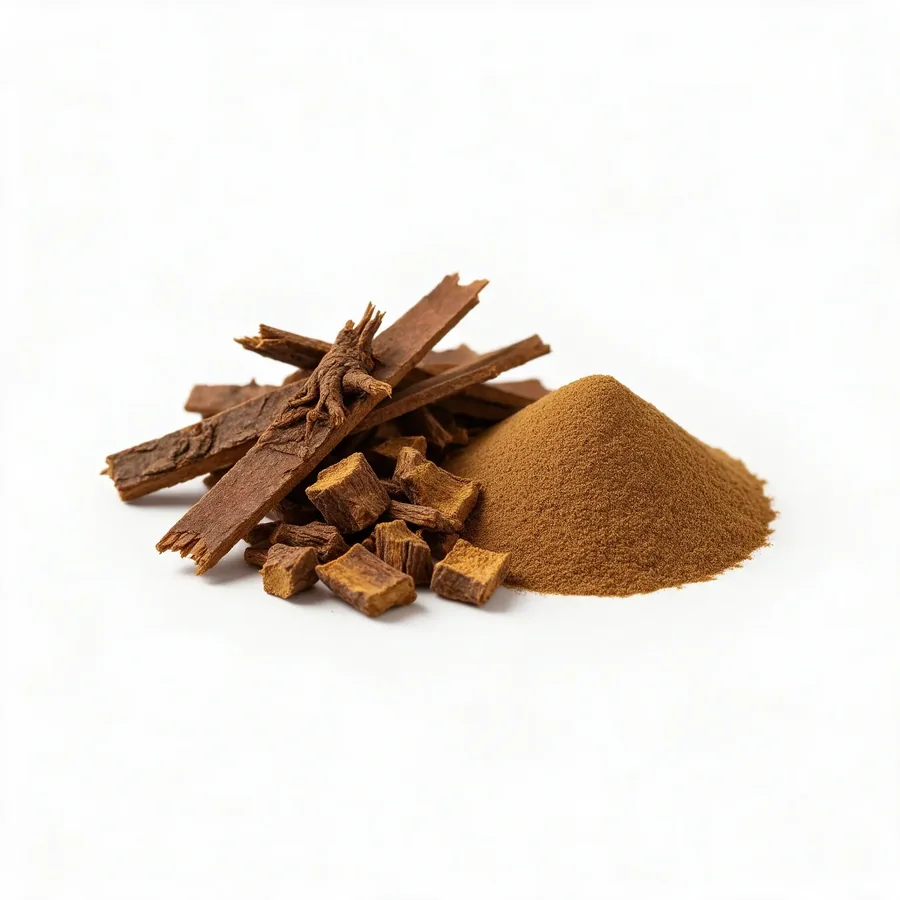
Muira puama: pieces of brown bark beside a cone of tan powder.
#1 of 9

Muira Puama Extract

Ptychopetalum olacoides, root and bark

On this label
at most 62 mg
In the research
500 mg a day — the bottom of the concentrate range the monograph reports
The gap
That ceiling is 12.40% of the smallest published daily dose. Reaching it would take 9 gummies a day.

The monograph records that “a muira puama concentrate dosage of 0.5 to 1.5 g/day was determined to be effective”, and in one combination-product study a total daily dose of 500 mg. It is equally clear about the evidence: “There are no quality clinical trials to provide dosing guidance” and “clinical evidence is lacking to support use of P. olacoides alone”.

Muira Puama — clinical monograph →
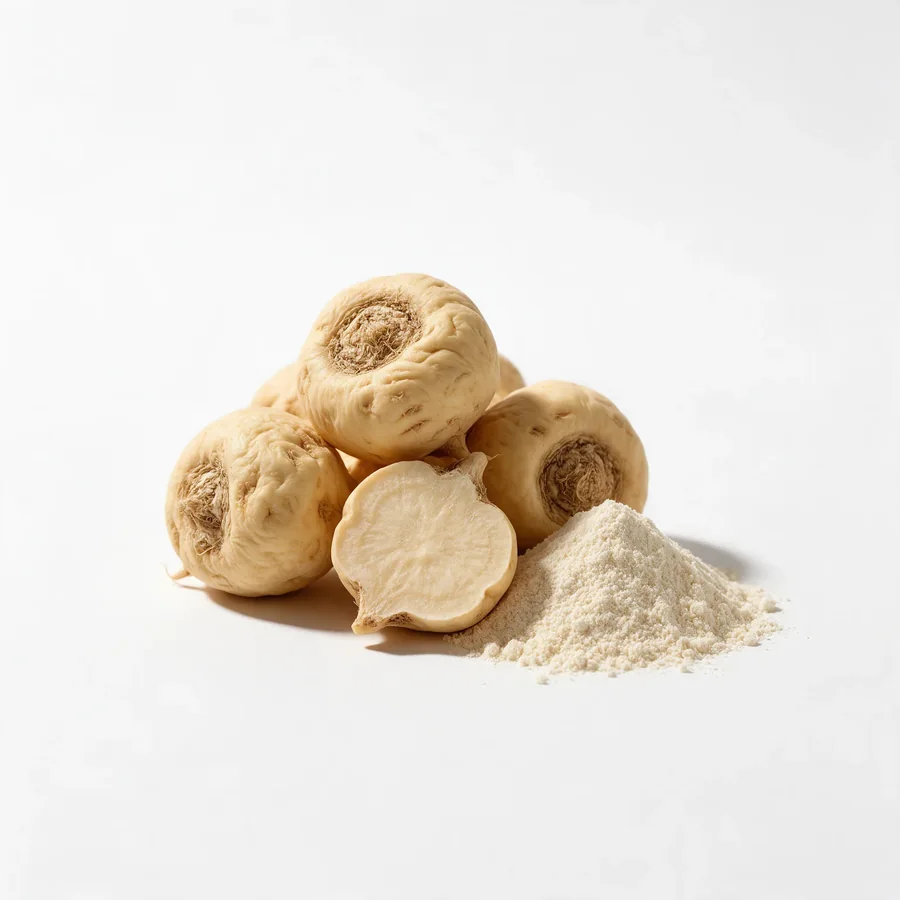
Maca: whole and halved pale roots beside a cone of cream powder.
#2 of 9

Maca Extract

Lepidium meyenii, root

On this label
at most 33.5 mg
In the research
1,500 mg a day — the smallest daily dose used in the trials the monograph lists
The gap
That ceiling is 2.23% of the smallest published daily dose. Reaching it would take 45 gummies a day.

Trial doses in the monograph run 1,500 mg, 2,400 mg, 3,000 mg and 3.5 g a day. The 1,500 mg arm is named as the one that did not work for SSRI-induced sexual dysfunction, so even the smallest figure in the table is a dose that failed in the study that used it.

Maca — clinical monograph →
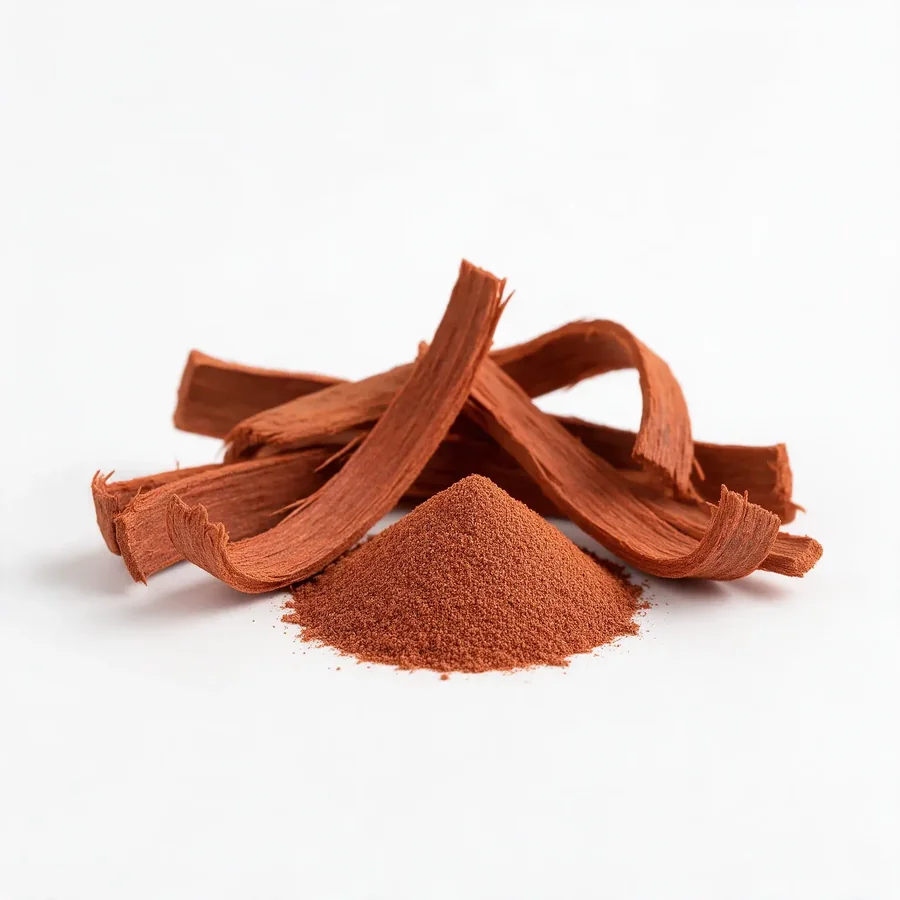
Catuaba: strips of red-brown bark beside a cone of rust powder.
#3 of 9

Catuaba Extract

On this label
at most 24 mg
In the research
no published clinical dose found
The gap
No published daily dose was found to compare it against.

No clinical monograph for catuaba could be found in the databases this site searched — the Drugs.com natural products database, Memorial Sloan Kettering’s About Herbs, NIH NCCIH and NIH ODS. There is therefore no published human dose to measure this label against, and this card will not supply one.

Searched: Drugs.com, Memorial Sloan Kettering, NIH NCCIH, NIH ODS. No monograph.
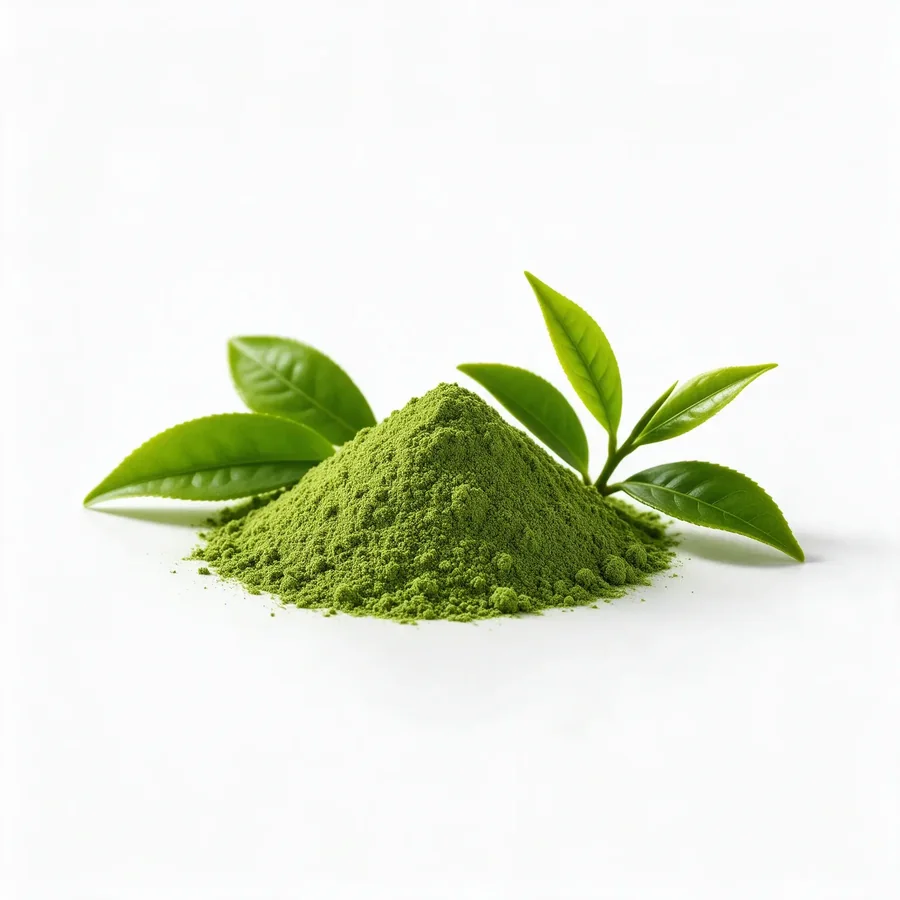
Green tea: fresh leaves beside a cone of bright green powder.
#4 of 9

Green Tea Extract

Camellia sinensis, leaf

On this label
at most 19.25 mg
In the research
400 mg a day — EGCG 200 mg twice daily, the dose described as safe for a year
The gap
That ceiling is 4.81% of the smallest published daily dose. Reaching it would take 21 gummies a day.

The figure in the research is EGCG, the named catechin — not green tea extract by weight. This label says “Green Tea Extract” and gives no EGCG content, no standardisation and no extract ratio, so the two numbers are not strictly the same unit. The same source records elevated liver enzymes at 800 mg EGCG a day and a USP labelling requirement that begins Do not take on an empty stomach.

Green Tea — About Herbs →
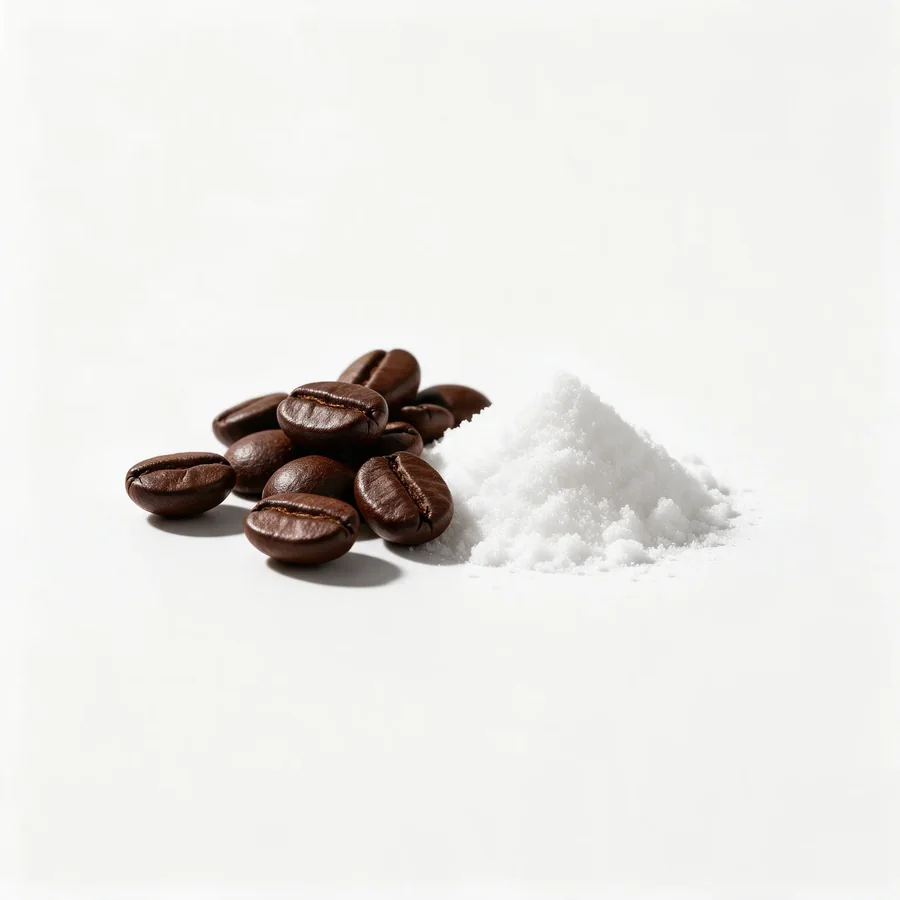
Caffeine: roasted coffee beans beside a small cone of white crystalline powder.
#5 of 9

Caffeine

On this label
5 mg, declared
In the research
FDA cites 400 mg a day as an amount not generally associated with negative effects
The gap
FDA puts a day at 400 mg for healthy adults, and a decaffeinated coffee at 2–15 mg.

The only individual amount anywhere on this panel: 5 mg. FDA puts a 12 fl oz coffee at 113 to 247 mg and says “decaf coffee typically has 2 to 15 milligrams in an 8-fluid-ounce cup.” Five milligrams is inside the decaffeinated range.

Spilling the Beans: How Much Caffeine is Too Much? →
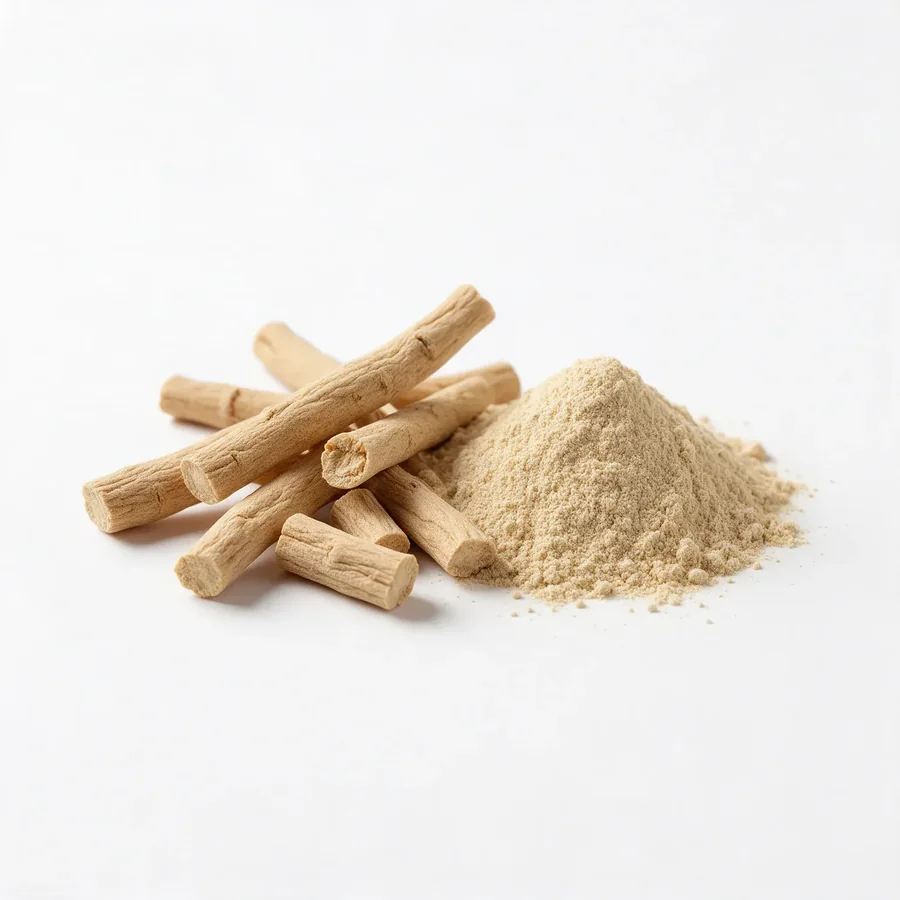
Ashwagandha: pale cut roots beside a cone of beige powder.
#6 of 9

Ashwagandha

Withania somnifera, root

On this label
at most 5 mg
In the research
125 mg a day — the bottom of the anxiety dose range the monograph reports
The gap
That ceiling is 4.00% of the smallest published daily dose. Reaching it would take 25 gummies a day.

The monograph gives “doses ranging from 125 to 12,000 mg/day … for anxiety”, with the sleep and anxiety trials it describes running at 300 mg twice daily. It also records that “cases of ashwagandha-induced liver injury have been reported” and that abortifacient properties have been reported.

Ashwagandha — clinical monograph →
No photograph was supplied for this ingredient.
#7 of 9

L-Arginine

On this label
at most 5 mg
In the research
600 mg a day — the smallest daily clinical dose in the monograph
The gap
That ceiling is 0.83% of the smallest published daily dose. Reaching it would take 120 gummies a day.

“Current daily dosage trends range from 6 to 30 g orally in 3 divided doses.” The smallest clinical figure in the monograph is 600 mg a day as adjuvant therapy for erectile dysfunction; the next is 500 mg three times daily. It also carries a nitrate interaction and is “not recommended following acute myocardial infarction”.

L-Arginine — clinical monograph →
No photograph was supplied for this ingredient.
#8 of 9

Tribulus Terrestris

Tribulus terrestris

On this label
at most 5 mg
In the research
no published clinical dose found
The gap
No published daily dose was found to compare it against.

Memorial Sloan Kettering gives no dose figures, and on the claim this product is sold against it is blunt: “in clinical studies, testosterone increases only occurred when tribulus was part of a combined supplement therapy, making it difficult to determine its contribution to this effect.” Case reports include nephrotoxicity and a 72-hour priapism.

Tribulus terrestris — About Herbs →
No photograph was supplied for this ingredient.
#9 of 9

Horny Goat Weed Extract

Epimedium

On this label
at most 5 mg
In the research
no published clinical dose found
The gap
No published daily dose was found to compare it against.

Memorial Sloan Kettering gives no dose figures. On the use this product is sold for: “Epimedium is traditionally used in herbal formulas for sexual dysfunction. More studies are needed to verify such effects.” Case reports include new-onset arrhythmia in a 66-year-old man with congestive heart failure after two weeks of daily use.

Epimedium (horny goat weed) — About Herbs →

04The kindest possible reading

If the 567 mg dry-powder footnote is read as the comparison basis instead of the 82 mg of extract, every ceiling scales by about 6.9. Here is how far that gets.

The kindest reading: ceilings scaled to dry-powder equivalent
IngredientCeiling, as extractCeiling, as dry powderSmallest published doseShare of it
Muira Puama Extract62 mg428.7 mg500 mg85.7%
Maca Extract33.5 mg231.6 mg1,500 mg15.4%
Green Tea Extract19.25 mg133.1 mg400 mg33.3%
Ashwagandha5 mg34.6 mg125 mg27.7%
L-Arginine5 mg34.6 mg600 mg5.8%

Even at 6.9 times the declared weight, and even assuming every ingredient sits at its own absolute ceiling — which cannot be true of more than one of them at a time, because the ceilings add to far more than 82 mg — only muira puama comes close, and only by taking 76% of the entire blend for itself. That is the best case. The real case is somewhere below it, and nothing on the label says where.

Ready when you are

Six bottles is $1.63 a day. Two is $2.80 a day.

Same gummy, same 82 mg blend, same one a day in all three packs. The only thing that changes between them is what a day costs and whether shipping is free.

Order now, from $1.63 a dayCompare all three packs

  • 60-day window, from purchase
  • Free shipping on the 3 and 6 bottle packs
  • One gummy a day, 30 a bottle
  • Official U.S. SodaBoost shop

This site holds no stock and takes no payment. Where to buy names the one place the order is taken, and the price, shipping and guarantee shown at the moment you check out are what govern - if they differ from the figures here, they win.

0582 milligrams against 567

In the gummy82 mgof extract, declared as a Proprietary Blend
Printed in the footnote567 mgof dry powders, which is what that extract was made from
82 mg is the part you swallow

The footnote reads ** equivalent to approximately 567mg of dry powders. and it is doing real work: the extracts are concentrated about 6.9 to 1, so 82 mg of them started life as roughly 567 mg of plant. Both figures are true. Only one of them is in the bottle. If you want the kindest possible reading of this label — and this site gives it one — then compare the 567 against the research instead, and see how far that gets.

06Six on the graphic, nine on the tin

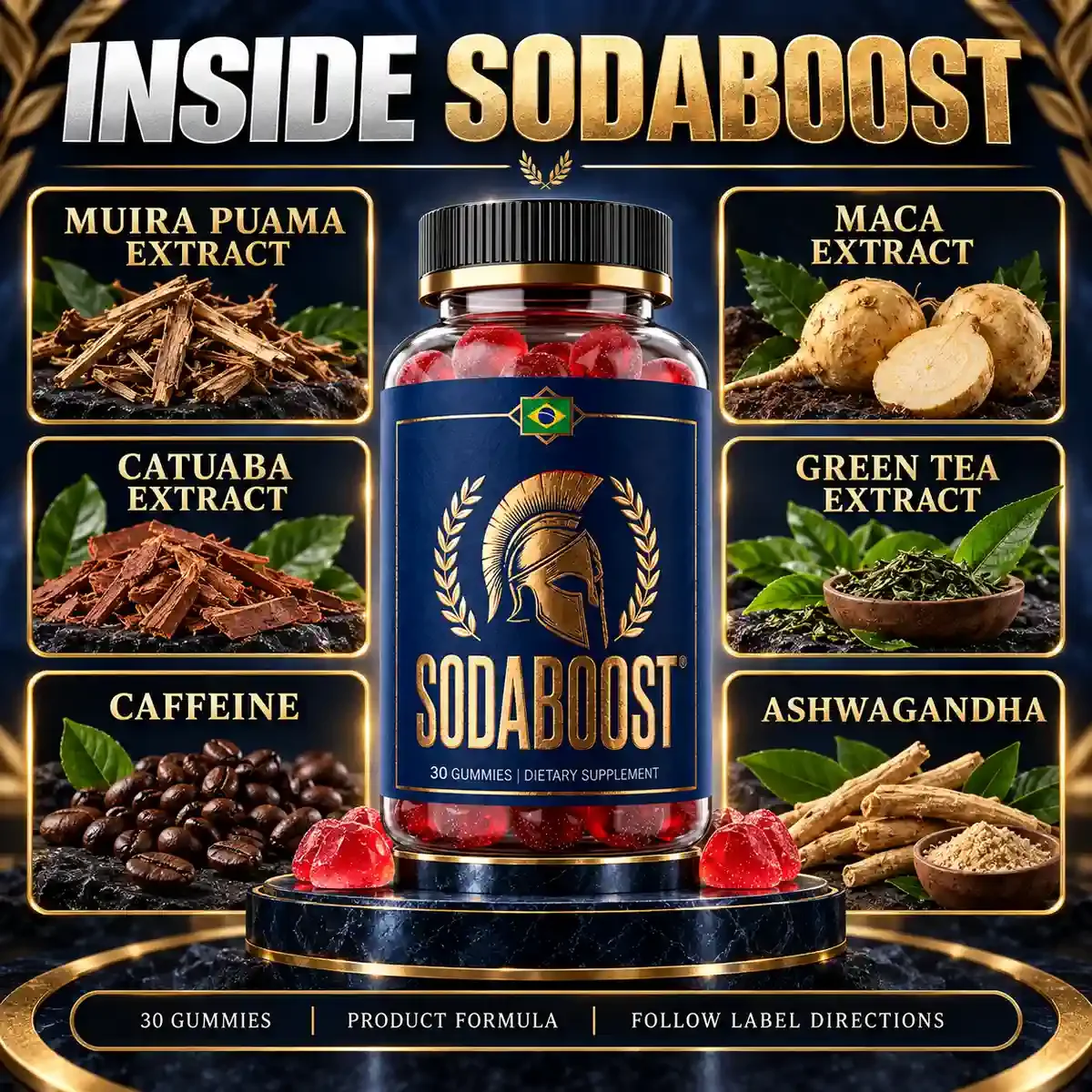
The seller's Inside SodaBoost listing graphic, which names six ingredients: Muira Puama Extract, Maca Extract, Catuaba Extract, Green Tea Extract, Caffeine and Ashwagandha.
The seller’s Inside SodaBoost graphic, as supplied.

Six tiles, six names

  1. Muira Puama Extract
  2. Maca Extract
  3. Catuaba Extract
  4. Green Tea Extract
  5. Caffeine
  6. Ashwagandha

The written pack types the same six — and so does the seller’s own press release of 4 October 2026, which names Muira Puama Extract, Maca Extract, Catuaba Extract, Green Tea Extract, Caffeine, and Ashwagandha and stops there. Three separate pieces of the seller’s own material say six. The bottle says nine.

The SodaBoost label laid flat: the suggested-use and warning panel on the left, the front panel in the middle, and the Supplement Facts panel on the right.
The Supplement Facts panel, as supplied.

Nine names, one line of type

  1. Muira Puama Extract
  2. Maca Extract
  3. Catuaba Extract
  4. Green Tea Extract
  5. Caffeine
  6. Ashwagandha
  7. L-Arginine not on the graphic
  8. Tribulus Terrestris not on the graphic
  9. Horny Goat Weed Extract not on the graphic

The three the graphic leaves out are the last three on the panel — which, under the descending-order rule, makes them the three smallest.

This site publishes all nine, because the label governs. It is worth knowing which three you would not have heard about from the marketing: L-arginine, which carries a nitrate interaction; tribulus, which carries kidney and priapism case reports; and horny goat weed, which carries an arrhythmia case report. Those are on the safety page.

07What “Extract” does not tell you

The panel says Extract four times — muira puama, maca, catuaba, green tea and horny goat weed — and never says of what strength. An extract is a concentration, and the number that describes it is what separates a clinical preparation from a flavouring.

  • No ratio per ingredient. The panel gives one blend-wide footnote (82 mg ≈ 567 mg of dry powders, about 6.9:1) and no ratio for any individual extract.
  • No standardisation. This matters most for green tea, where the entire research literature is written in terms of EGCG content and this label declares none.
  • No plant part. Bark, root, leaf and seed extracts of the same plant are different materials. The plant parts named on the cards above come from the monographs, not from this label.
  • No solvent. What a solvent pulls out of a plant depends on the solvent.

08What the FTC says about comparing doses

The dose comparison running through this page is not this site’s invention. It is the question the Federal Trade Commission’s own guidance tells advertisers to ask: How do the dosage and formulation of the advertised product compare to the product used in the study?

And the standard it sets for the answer: If there are significant discrepancies between research conditions and the real-life use being promoted, advertisers must evaluate whether it is appropriate to extrapolate from the research to the claimed effect.

  1. Health Products Compliance GuidanceU.S. Federal Trade Commission“How do the dosage and formulation of the advertised product compare to the product used in the study?” and “If there are significant discrepancies between research conditions and the real-life use being promoted, advertisers must evaluate whether it is appropriate to extrapolate from the research to the claimed effect.”

09Sources for this page

  1. Dietary Supplement Labeling Guide, Chapter IV: Nutrition LabelingU.S. Food and Drug AdministrationQuestion 34 is the rule this whole site turns on: a proprietary blend must declare “the total weight of all ‘other dietary ingredients’ contained in the blend” and list them “in descending order of predominance by weight.”
  2. Muira Puama — clinical monographDrugs.com natural products database“A muira puama concentrate dosage of 0.5 to 1.5 g/day was determined to be effective”, alongside “There are no quality clinical trials to provide dosing guidance.”
  3. Maca — clinical monographDrugs.com natural products databaseTrial doses of 1,500 mg, 2,400 mg, 3,000 mg and 3.5 g a day; the 1,500 mg arm is the one named as ineffective for SSRI-induced sexual dysfunction.
  4. Green Tea — About HerbsMemorial Sloan Kettering Cancer Center“EGCG 200 mg twice daily for one year is safe”; 800 mg daily “was associated with elevated liver enzymes”; and the USP labelling requirement beginning “Do not take on an empty stomach.”
  5. Spilling the Beans: How Much Caffeine is Too Much?U.S. Food and Drug Administration400 mg a day is “an amount not generally associated with negative effects” for most adults; coffee runs “113 to 247 milligrams” per 12 fl oz; and “decaf coffee typically has 2 to 15 milligrams in an 8-fluid-ounce cup.”
  6. Ashwagandha — clinical monographDrugs.com natural products database“Doses ranging from 125 to 12,000 mg/day have been used for anxiety”; “Cases of ashwagandha-induced liver injury have been reported.”
  7. L-Arginine — clinical monographDrugs.com natural products database“Current daily dosage trends range from 6 to 30 g orally in 3 divided doses”; L-arginine “may potentiate the effects” of nitrates and is “not recommended following acute myocardial infarction.”
  8. Tribulus terrestris — About HerbsMemorial Sloan Kettering Cancer Center“In clinical studies, testosterone increases only occurred when tribulus was part of a combined supplement therapy”; nephrotoxicity and a 72-hour priapism among the case reports.
  9. Epimedium (horny goat weed) — About HerbsMemorial Sloan Kettering Cancer Center“Epimedium is traditionally used in herbal formulas for sexual dysfunction. More studies are needed to verify such effects”, with a new-onset arrhythmia case report and CYP3A4 interactions.
  10. Health Products Compliance GuidanceU.S. Federal Trade Commission“How do the dosage and formulation of the advertised product compare to the product used in the study?” and “If there are significant discrepancies between research conditions and the real-life use being promoted, advertisers must evaluate whether it is appropriate to extrapolate from the research to the claimed effect.”

Official U.S. SodaBoost shop

Pick the pack, then press the button

Three packs of the same gummy. The six-bottle pack is $1.63 a day with free shipping and the lowest cost a day by a wide margin; the two-bottle pack is $2.80 a day and the only one that still carries shipping. Every figure below is reproduced as supplied at checkout.

  • 2 bottles$2.80a day$167.99 total · $9.99 shippingOrder 2 bottles60 gummies · 60 days at one a day · Exactly all of it inside the 60-day window
  • Most bought3 bottles$2.30a day$207.00 total · Free shippingOrder 3 bottles90 gummies · 90 days at one a day · 30 of its 90 days fall outside the window
  • Lowest per day6 bottles$1.63a day$294.00 total · Free shippingOrder 6 bottles180 gummies · 180 days at one a day · 120 of its 180 days fall outside the window

Order now, from $1.63 a dayRead the label first

  • 60-day window, from purchase
  • Free shipping on the 3 and 6 bottle packs
  • One gummy a day, 30 a bottle
  • Official U.S. SodaBoost shop

This site holds no stock and takes no payment. Where to buy names the one place the order is taken, and the price, shipping and guarantee shown at the moment you check out are what govern - if they differ from the figures here, they win.

What this page was checked against

Every figure on it is transcribed from the supplied Supplement Facts panel and checked-out pack, derived by arithmetic from those, or taken from a source on the references page.

Medically reviewed byDr. Alexander W. Pastuszak, MD, PhD, Physician
RoleMedical reviewer
Review dateOctober 12, 2026
Revised